Washington University School of Medicine Washington University School of Medicine
Search
Program in Physical Therapy
About Us
Prospective Students
Current Students
Faculty and Staff
Research
Alumni
Continuing Education
Clinical Practice
Washington University School of Medicine
Locomotor Control Laboratory
Director: Gammon M. Earhart, PT, PhDearhartg@wusm.wustl.edu

Publications - Earhart, GM

Lab Group Members

Research Interests

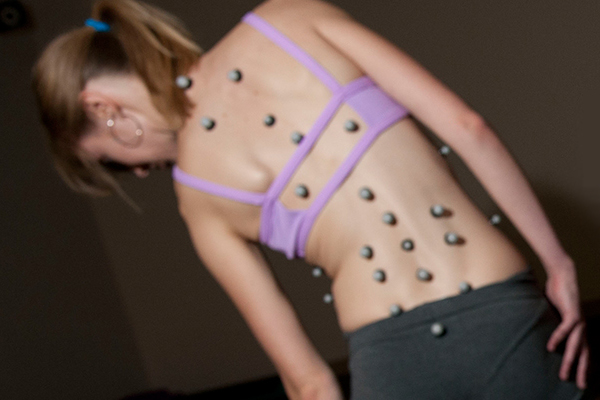
Our overarching interest is in the neural control of movement, with an emphasis on the effects of Parkinson disease (PD) on motor control. We are particularly interested in the neural control of locomotion and locomotor adaptations. We use a variety of tools, including 3-D kinematics, videooculography, and electromyography, in our studies. The major projects currently being conducted in the laboratory are detailed in the paragraphs that follow.

Oculomotor Control and Gait in Parkinson Disease (PD)

Eye movements are critical to successful locomotion, as we must look where we are going in order to navigate in our daily environments. The aim of this study is to determine the contribution of eye movement impairments to locomotor difficulties in individuals with Parkinson disease. This project employs 3-D whole-body kinematics and videooculography to compare eye movements and locomotor patterns in people with PD and matched controls and is funded by an NIH R01. We are also interested in developing interventions to treat eye movement deficits to enhance locomotor function. This latter aim is supported by a grant from the Barnes Jewish Hospital Foundation.


Rotating Treadmill Training: Adaptation and Application

The rotating treadmill is a large, motorized turntable designed for locomotor training. We are currently conducting studies with healthy individuals to determine how the nervous system adapts to walking on this novel surface. This work is funded by a subcontract on an NIH R01 awarded to Fay Horak, PT, PhD, of Oregon Health & Science University. We are also interested in clinical applications of the rotating treadmill, as individuals with PD often have difficulty turning, even when they have little to no difficulty walking straight. We aim to determine the effects of rotating treadmill training on turning in people with PD.

Freezing of Gait in PD

Freezing of gait, a sudden stoppage of ongoing walking, is a serious problem for many individuals with PD. The mechanisms underlying freezing are not well understood and freezing is notoriously difficult to elicit in laboratory or clinical settings, even among individuals who have frequent and problematic freezing in their daily lives. The aim of this study is to determine what factors (e.g., cadence, stride length, gait asymmetry) contribute to freezing and whether/how these factors can be manipulated in order to consistently elicit freezing.


Movement-Related Cortical Activity in PD

We are using electroencephalography to study movement-related cortical potentials (MRCPs) in individuals with and without PD. We aim to determine the effects of age and disease on MRCPs. We are especially interested in the effects of fatigue, anti-Parkinson medications, and resistance training on cortical activity. This project is in collaboration with Drs. Erik Sirevaag and John Rohrbaugh in the Department of Psychiatry.

Mechanisms of Deep Brain Stimulation in PD

Deep brain stimulation is becoming a popular surgical treatment for PD, but the mechanisms of DBS remain poorly understood. We are part of a multidisciplinary team examining the effects of DBS on various motor and non-motor functions. The aim of the study is to determine the differential effects of stimulation of the dorsal versus the ventral aspect of the subthalamic nucleus. Our role is to examine the effects of DBS on balance and gait. This study is funded by an NIH R01 awarded to Joel Perlmutter, MD, Director of the Movement Disorder Center at Washington University School of Medicine.


Dance as Therapy for PD

In the past few years we have conducted several studies demonstrating the beneficial effects of dance on balance, gait, and quality of life among individuals with PD. We are currently conducting a year-long, community-based Argentine tango study that will examine the long-term effects of this type of intervention on balance, gait, quality of life, mood, cognition, and participation. This work is funded by the Parkinson’s Disease Foundation.

Unveiling the Natural History of Mobility and Quality of Life in PD:
Charting History of Progression (CHOP_PD)

Little is known about how mobility, quality of life, and exercise habits of individuals with PD change over the course of the disease. We are part of a multi-site, longitudinal cohort study that will track these factors in a group of individuals over a number of years. The other sites for the study are the University of Utah, Boston University, and the University of Alabama-Birmingham. This project is funded by the Davis Phinney Foundation.


mailto:ptprog @wustl.edu